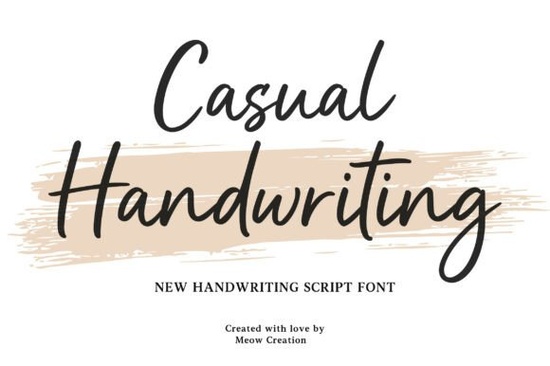
If you’re looking for a clean, easy-to-read handwritten font that feels personal and warm, Casual Handwriting Font delivers exactly that. Its smooth, relaxed strokes land somewhere between a tidy note and a soft brush script without the usual pressure of calligraphy flourishes. That makes it a flexible pick for anyone who needs a friendly, modern hand-lettered look that doesn’t overpower the message.
What makes casual handwriting fonts so useful for everyday design?
Casual scripts are rarely about perfection. They’re about approachability. With balanced letter spacing and a steady baseline, this font keeps long quotes readable while still adding warmth. The letters stay open, the curves are gentle, and there are no extreme thins that disappear at small sizes. That’s exactly why so many crafters and small business owners reach for a font like this for social media graphics, product labels, and personalized stationery.
Unlike a structured serif or a geometric sans, a handwritten style can make a design feel like a conversation. It works especially well when your goal is to convey honest, uncomplicated, or homemade energy. If your brand voice is closer to “let’s chat” than “esteemed boardroom,” a font like this helps you stay consistent without looking overly formal.
Is this font easy to read at small sizes?
For a handwritten script, readability at smaller scales is more common than many people expect. The letterforms are relatively uniform and don’t rely on tight loops or dramatic slants. That means below 14pt on a screen, you’ll still recognize most characters quickly. In print, it holds up well on thank-you tags, envelope addressing, or product inserts places where you want personality but can’t afford to confuse the reader.
One helpful trick is to use it with generous line spacing. A little extra breathing room keeps the casual flow natural and stops descenders from tangling with the next line, especially in dense text blocks. If you’re creating tumbler wraps or apparel mockups, you’ll find that same clarity holds up even when the design is viewed from a slight distance.
What kind of projects work best with a relaxed handwritten script?
This style thrives in contexts that feel personal, not mass-produced. Some natural fits include:
- Quote graphics and affirmations for Instagram, Pinterest, or Facebook a soft script pairs beautifully with a simple sans-serif subheading.
- T-shirt and tote bag designs where the font becomes the focal point, often paired with a subtle illustration or a distress texture.
- Invitations and greeting cards for birthday parties, casual weddings, or baby showers, it sets a tone that’s welcoming rather than extravagant. If you need a more signature-style script for formal wedding suites, something like The Wedding Signature Font (explore here) might be a better match.
- Branding kits for lifestyle businesses think cafés, handmade shops, yoga studios, or wellness coaches. The font can sit on a logo, a menu header, or a pricing guide without feeling stuffy.
- Digital planners and journaling templates where the handwritten feel keeps the layout intimate.
How does Casual Handwriting compare to more decorative or seasonal fonts?
The advantage is versatility. Where a whimsical duo like Ourstory Font Duo brings a playful mix of styles that really shine in scrapbooking or children’s themes, Casual Handwriting stays closer to a single clean voice. It doesn’t shout for attention, so it’s easier to reuse across different seasons and product lines without looking dated.
You won’t get the festive bounce of a dedicated Christmas script or the childlike charm of a font like Letterland, but that restraint is exactly what makes it a solid workhorse. You can dress it up for Valentine’s Day by pairing it with a heart illustration or make it feel autumnal with warm-toned backgrounds the font itself won’t clash.
For a brush-style alternative that still feels relaxed but offers longer swooshes, you might look at Shina Qatline. It brings a slightly more dynamic hand-lettered rhythm, while Casual Handwriting stays in the lane of simplicity and clarity.
Can you use this font for commercial projects?
When you download from Creative Fabrica, the standard license generally covers a wide range of commercial uses, including print-on-demand products, digital designs sold to clients, and merchandise. Always check the specific license terms for the font, but most designers and small shop owners will find that it fits comfortably within the permitted uses from physical product creation to logo design for client work.
Keep your workflow efficient by saving a test file with the font applied at a few key sizes and in both black text and reversed white on dark backgrounds. That way, you’ll know instantly whether it’s legible for a given project before you commit to the final layout.
Quick project checklist before you start
- Check your line height set it to at least 130% of the font size to protect the relaxed rhythm.
- Pair wisely a clean geometric or soft rounded sans-serif often keeps the design grounded without competing.
- Test on your background the font’s moderate stroke contrast means it plays nicely with subtle textures and soft gradients.
- Use true small caps or alternate characters if available a touch of variation in a heading or logo mark can add a custom feel without extra fonts.
- Export a print test especially for merchandise, a quick paper print helps verify that the curves translate well to physical output.
After a few projects, you’ll likely develop a short mental checklist that makes selecting and applying fonts like this almost automatic. The goal is always the same: get the friendly, human touch into your design without losing readability or flexibility for tomorrow’s idea.
Get Started Rainbow Font Design Ideas for Colorful Projects
 Best Free Christmas Fonts for Holiday Crafts & Design
 Creative Ways to Use Letterland Font in Learning Design
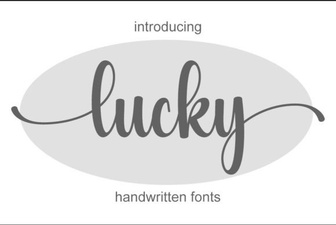 Lucky Font: Playful Typeface for Creative Projects
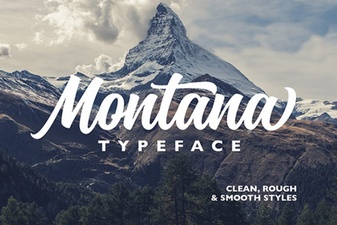 Montana Font: Fresh Design Ideas for Any Project
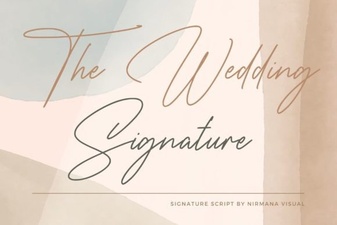 Elegant Uses for the Wedding Signature Font